PLECS models#
plecs.write_model writes a PLECS Standalone model of the system. The system model is built from the native blocks of PLECS, and the control system is a subsystem on the left:
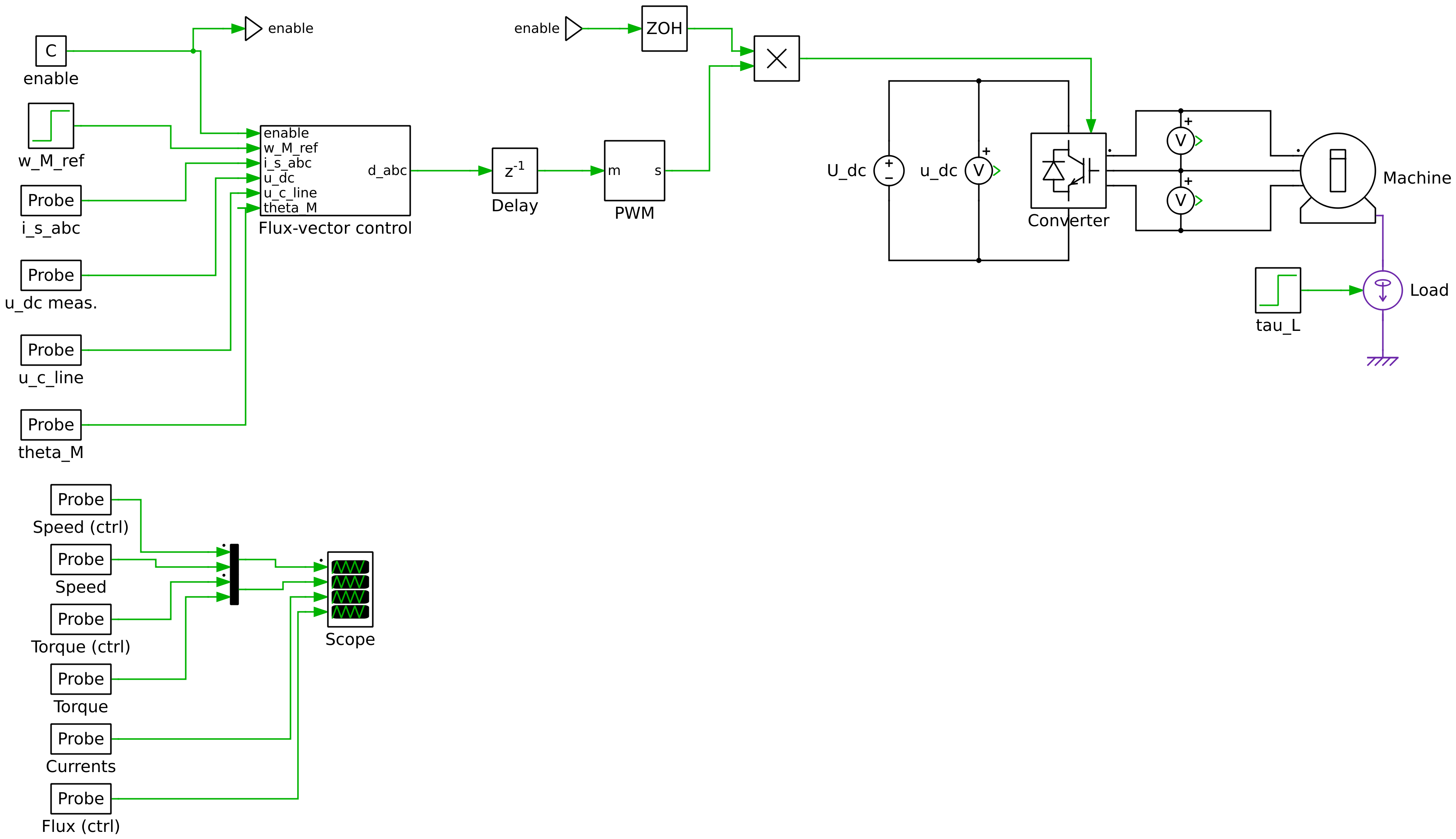
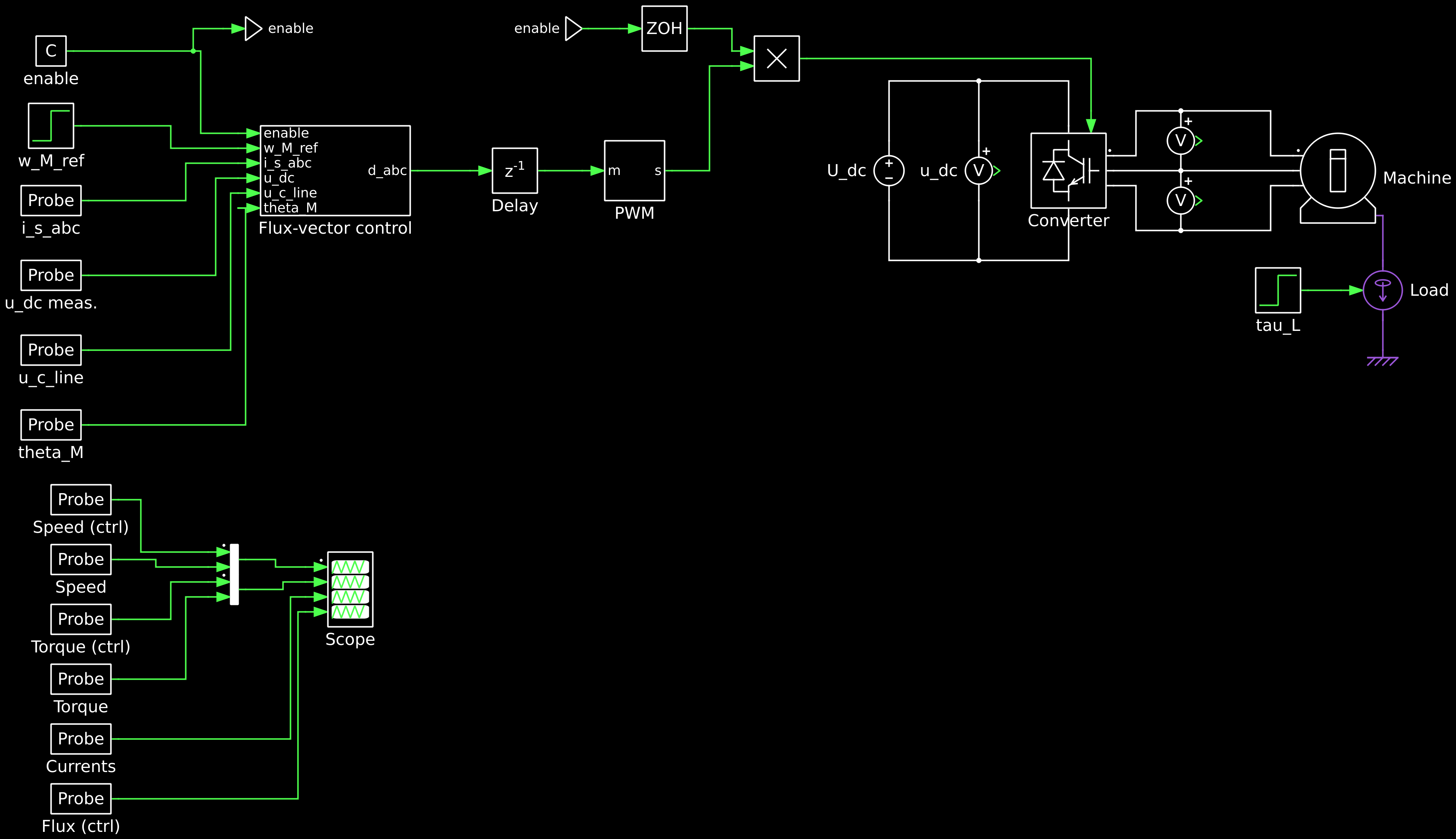
Top level of the model written by examples/ipmsm_2kw_fvc.py: the control system with its references and measurements, the computational delay, the PWM, the converter, the machine, the load, and the scope.
Control system#
Inside the control system, each class of motulator is a block, nested as in motulator. The blocks run the C port of the control algorithms in C-Script blocks:
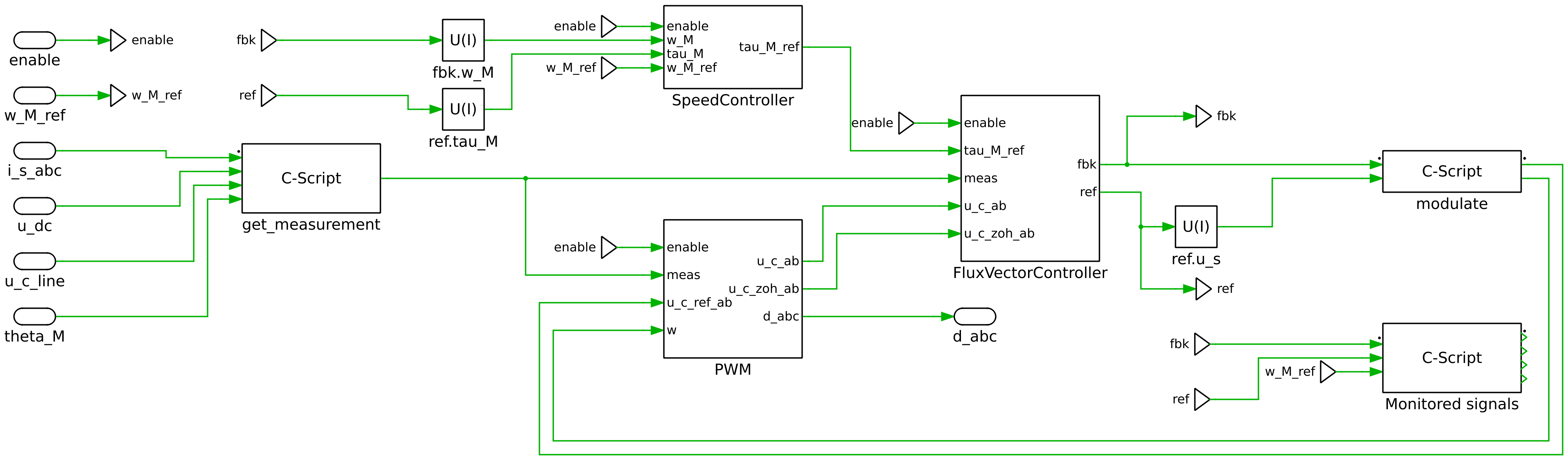
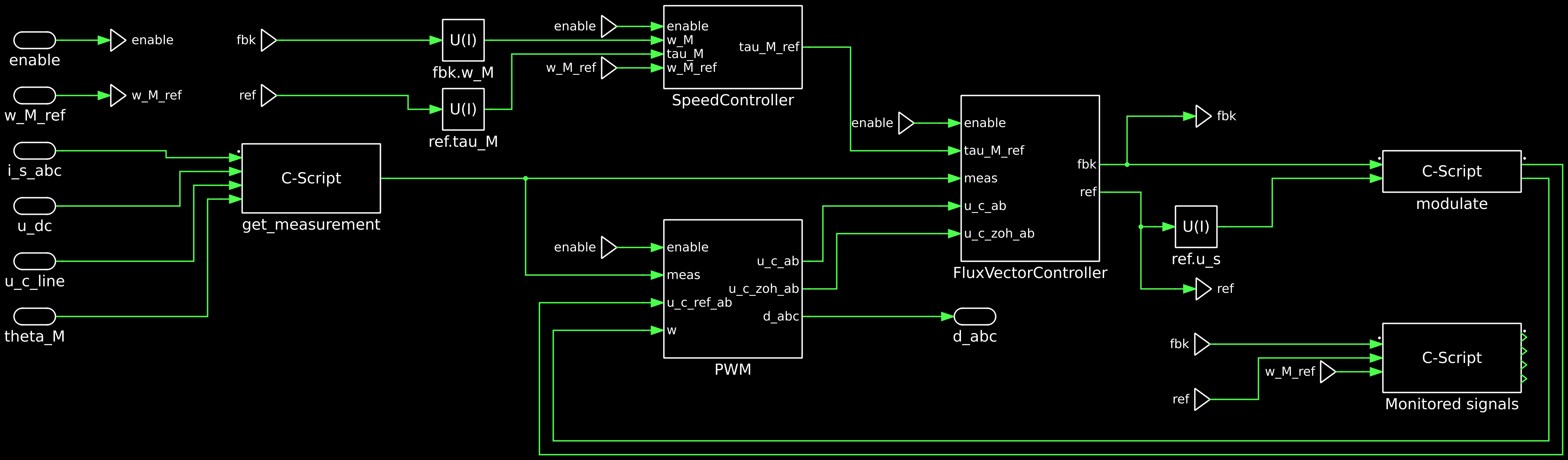
Inside the flux-vector control system (VectorControlSystem): the measurements, the SpeedController, the FluxVectorController, and the PWM.
The mask of each block shows the arguments of its class. The masks of the blocks at this level refer to the parameters of the model, see below.
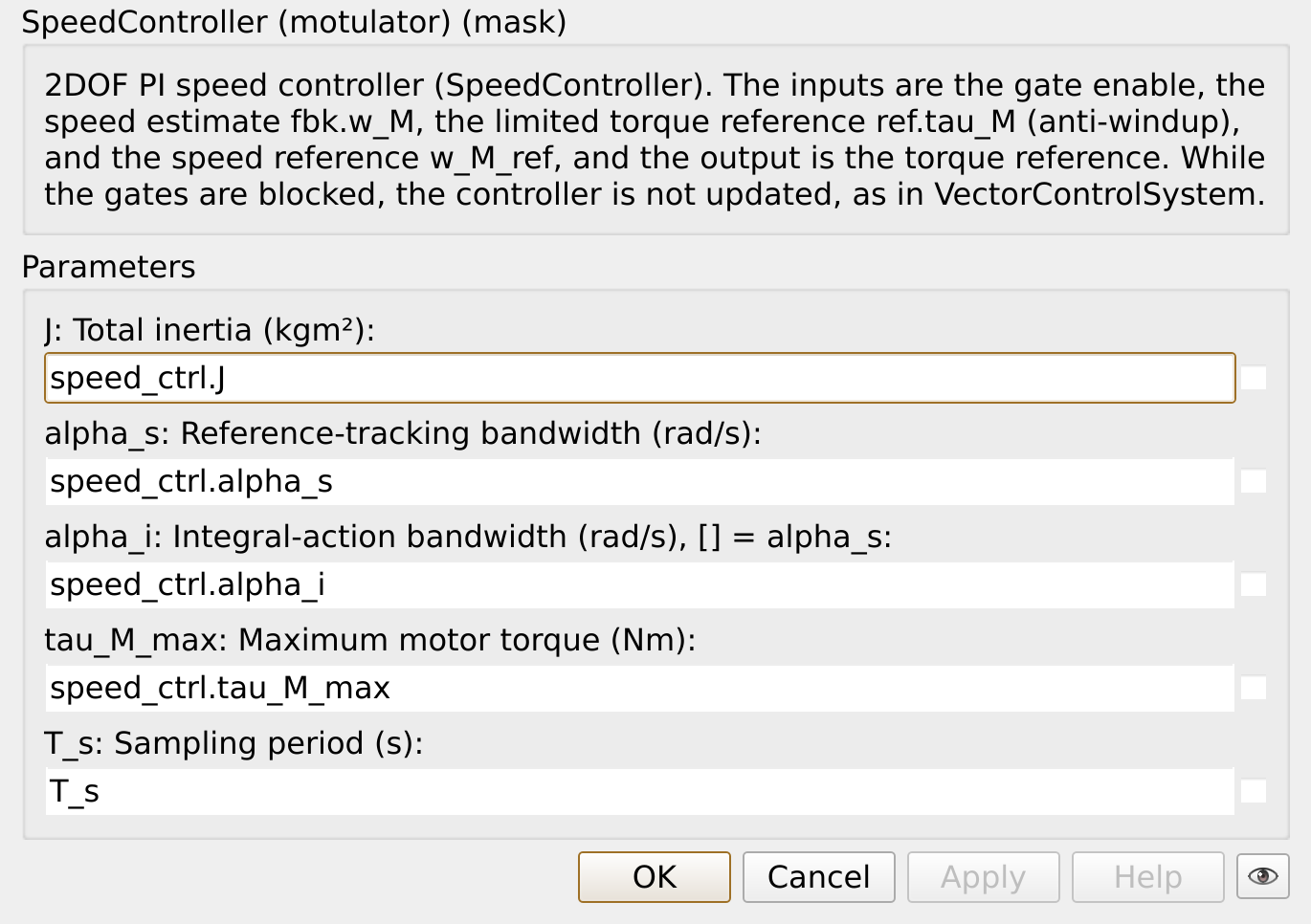
Mask of the SpeedController block.
Parameters#
The parameters are defined in the initialization commands of the model (Simulation > Simulation Parameters > Initialization), which read as a motulator script. An empty value ([]) means None, i.e., the default of motulator. For example:
% Machine model of the control system (SynchronousMachinePars)
par.n_p = 3;
par.R_s = 3.6;
par.L_d = 0.036;
par.L_q = 0.051;
par.psi_f = 0.545;
% Flux-vector control (FluxVectorControllerCfg)
cfg.i_s_max = 6.5;
cfg.alpha_tau = 2*pi*100;
cfg.alpha_psi = [];
...
% Speed controller (SpeedController)
speed_ctrl.J = 0.015;
speed_ctrl.alpha_s = 25;
Changing a parameter needs no Python: edit the initialization commands and run the simulation.
Simulation results#
The scope shows the speed, the torque, the stator currents, and the flux linkage:
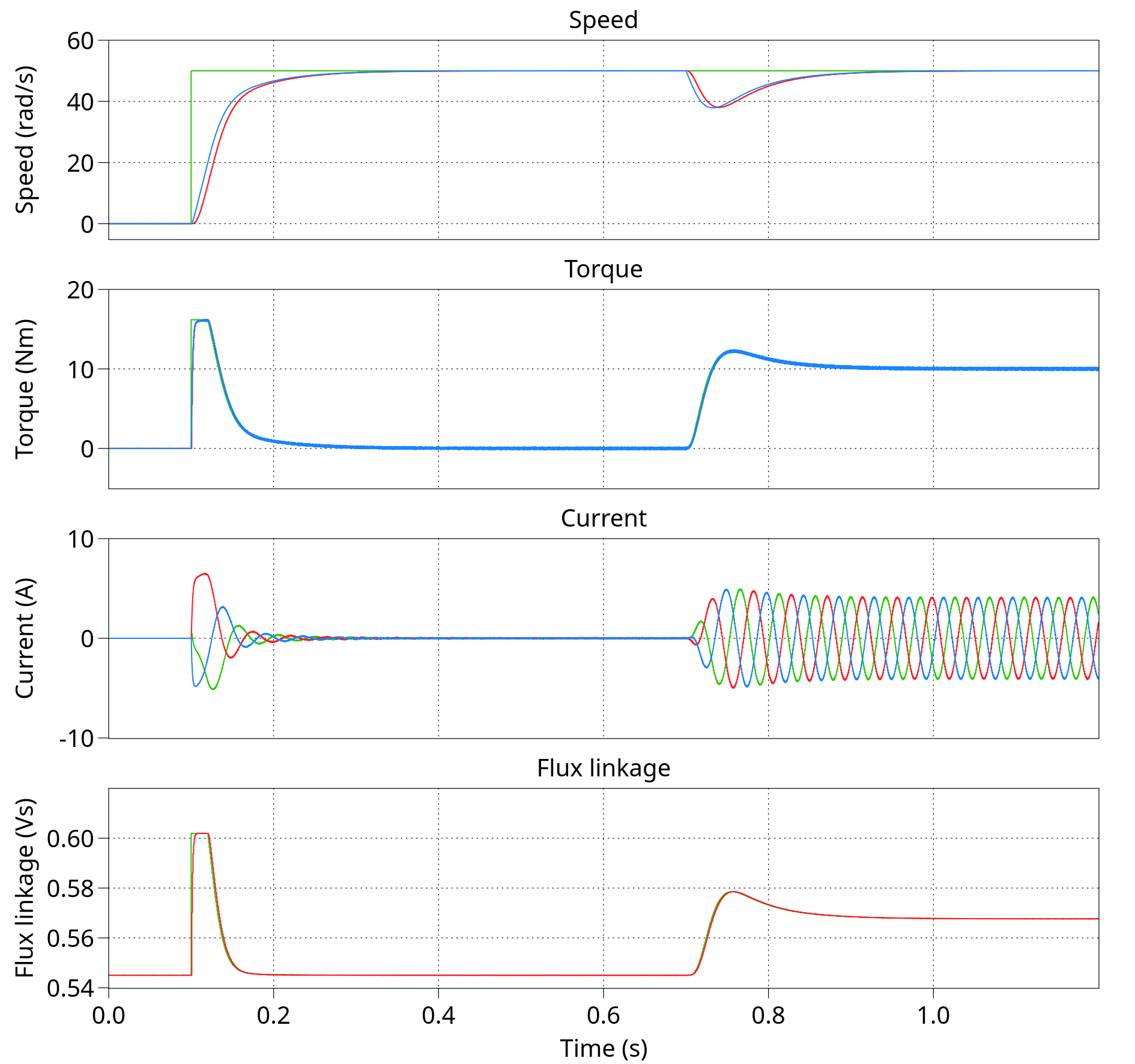
Scope of the model written by examples/ipmsm_2kw_fvc.py: a speed step at 0.1 s and a load torque step at 0.7 s. The speed and the torque plots show the reference, the estimate of the control system, and the actual value, and the flux linkage plot the reference and the estimate.
Grid converter systems#
The grid converter systems have the same structure, with the AC filter and the grid in place of the machine:
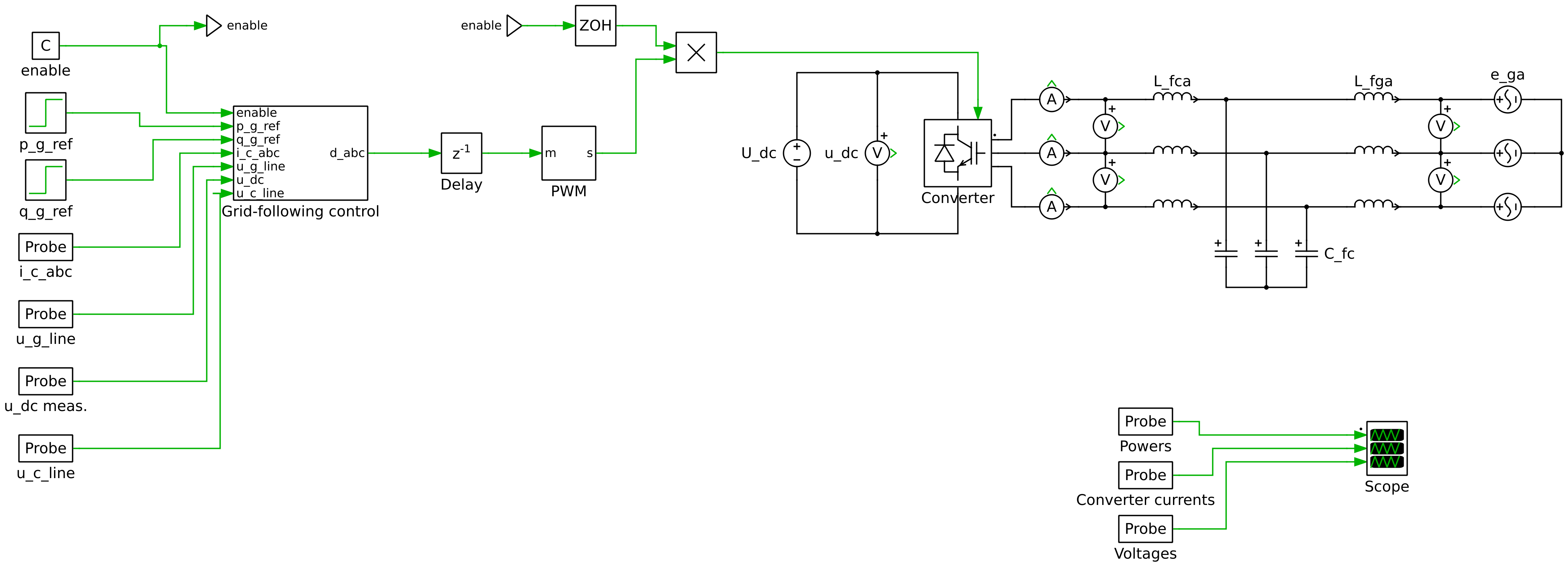
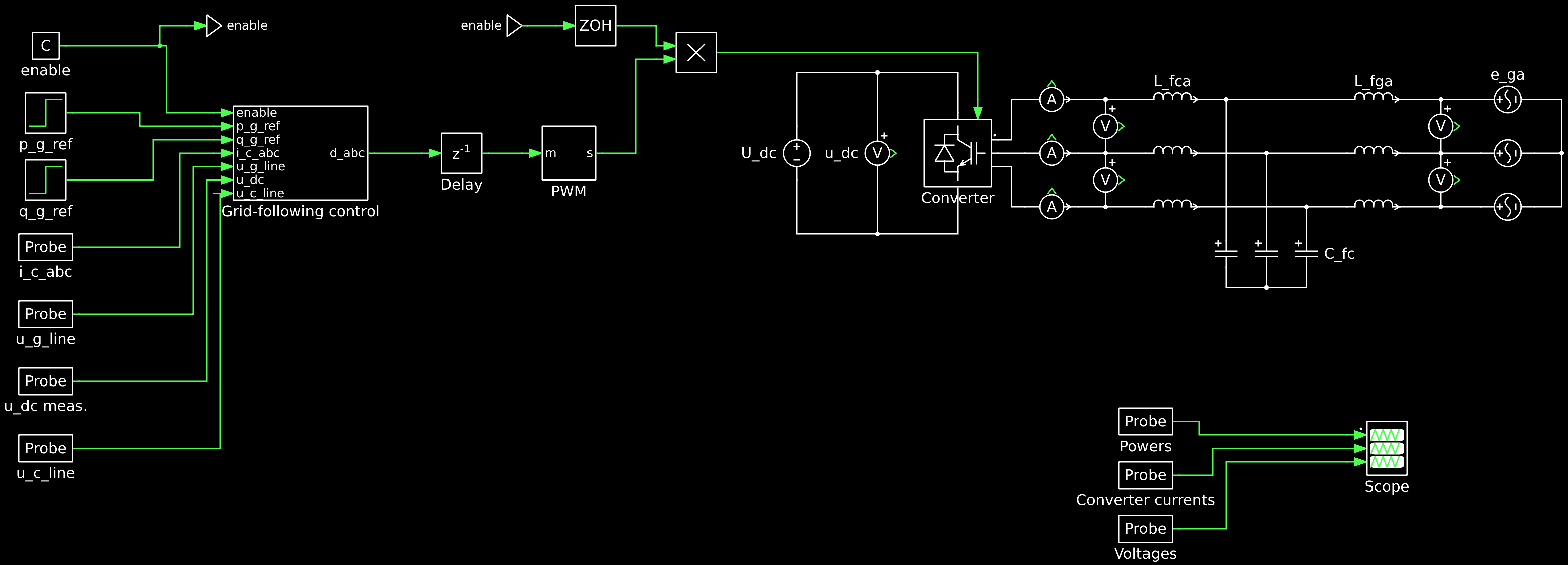
Top level of the model written by examples/gfl_10kva_lcl.py: grid-following control of a converter with an LCL filter.
Simulating from Python#
plecs.simulate runs a model through the RPC interface of PLECS and returns the signals of the system model and the monitored signals of the control system, e.g., for comparing with motulator. The model needs output ports for this:
import numpy as np

path = plecs.write_model("ipmsm.plecs", mdl, ctrl, t_stop=1.2, outputs=True)
t_eval = np.linspace(0, 1.2, 1201)
mdl_signals, ctrl_signals = plecs.simulate(path, t_eval, mdl, ctrl)
Good to know#
The first input of the control system is the gate enable (
ctrl.set_enable). While it is zero, the gates of the converter are blocked, and the control system runs in standby, as in motulator.The model refers to the C sources of the installed package by a path relative to the model file. If you move the model or update the package, write the model again.
plecs.simulatecloses the model in PLECS before loading it, discarding unsaved changes, since PLECS does not reload an open model from the file.